A pirate simulator that keeps to the historical record
Most pirate games are adventures with ships in them. Privateer: Pirate's Reckoning is built the other way round. It starts from how a private ship of war in the Caribbean of 1702 was sailed, fought, manned and paid for, and makes a game out of that. This page says what is simulated, and where the game simplifies.
Play Pirate's Reckoning Free. Runs in your browser. Nothing to install.
Privateer or pirate
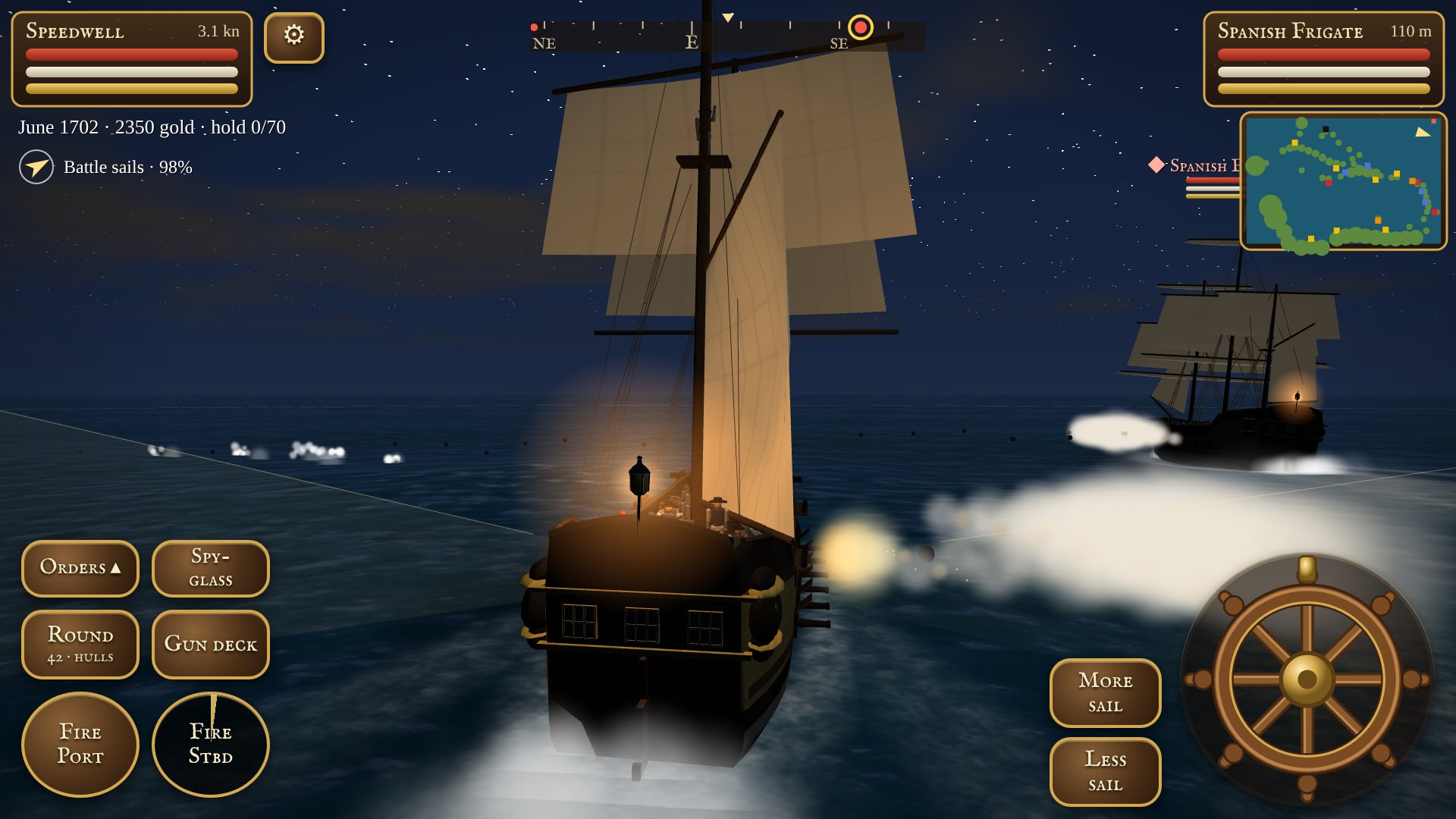
The two words are often used as if they meant the same thing. They did not. A privateer held a commission from a government and took enemy ships in wartime under rules. A pirate had no commission and took anyone. The same men were frequently one and then the other, and the game follows that. You begin as a privateer with owners, a flag and a court to answer to. Whether you stay one is your decision, and the consequences of that decision are part of the simulation.
The history page explains the background in more detail.
What is simulated
Wind and sail
Speed depends on your heading against the wind, the sail you carry, damage aloft and the growth on the ship's bottom. Sails take time to set and furl. The wind shifts through the day and freshens into gales.
Gunnery
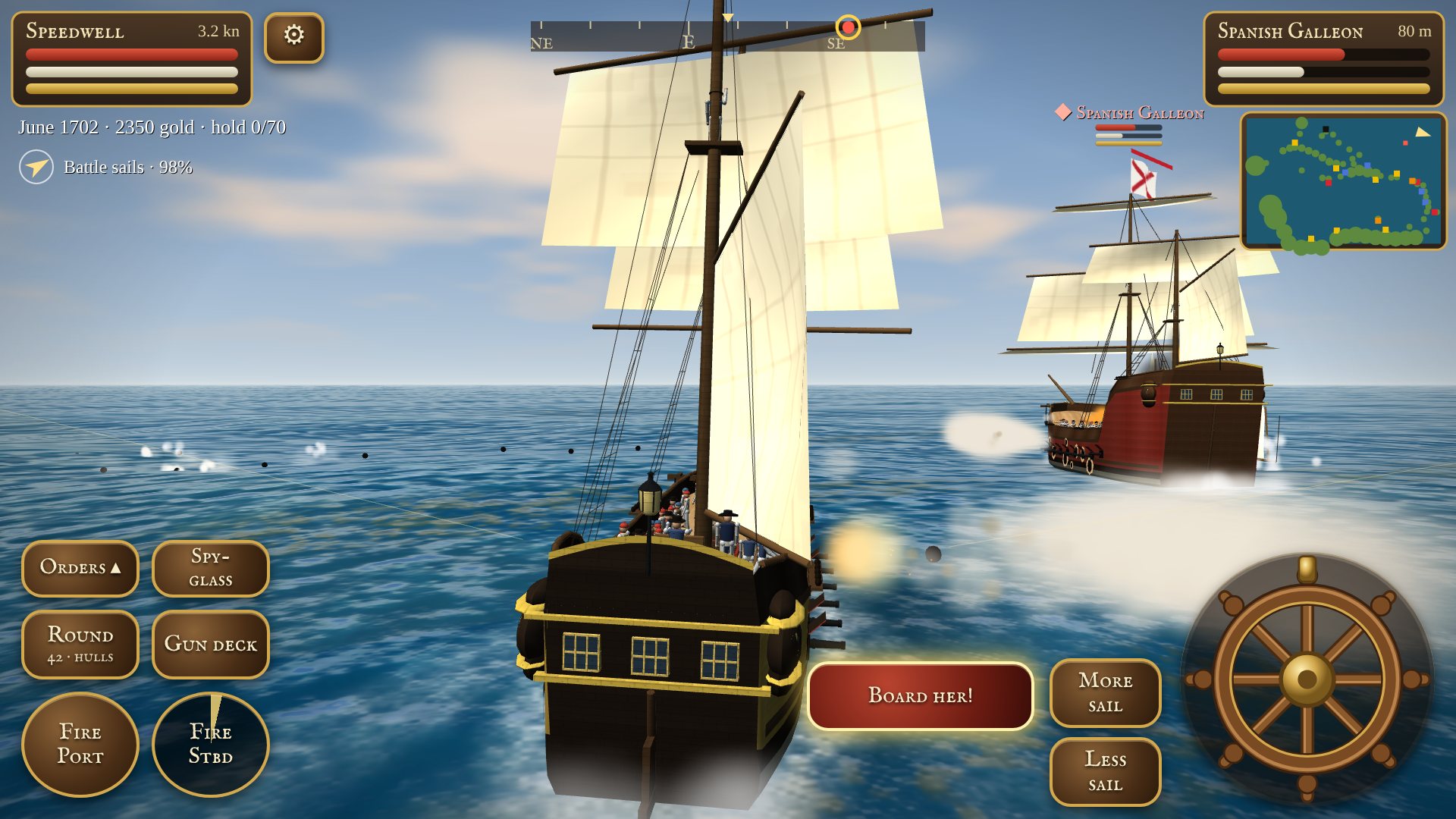
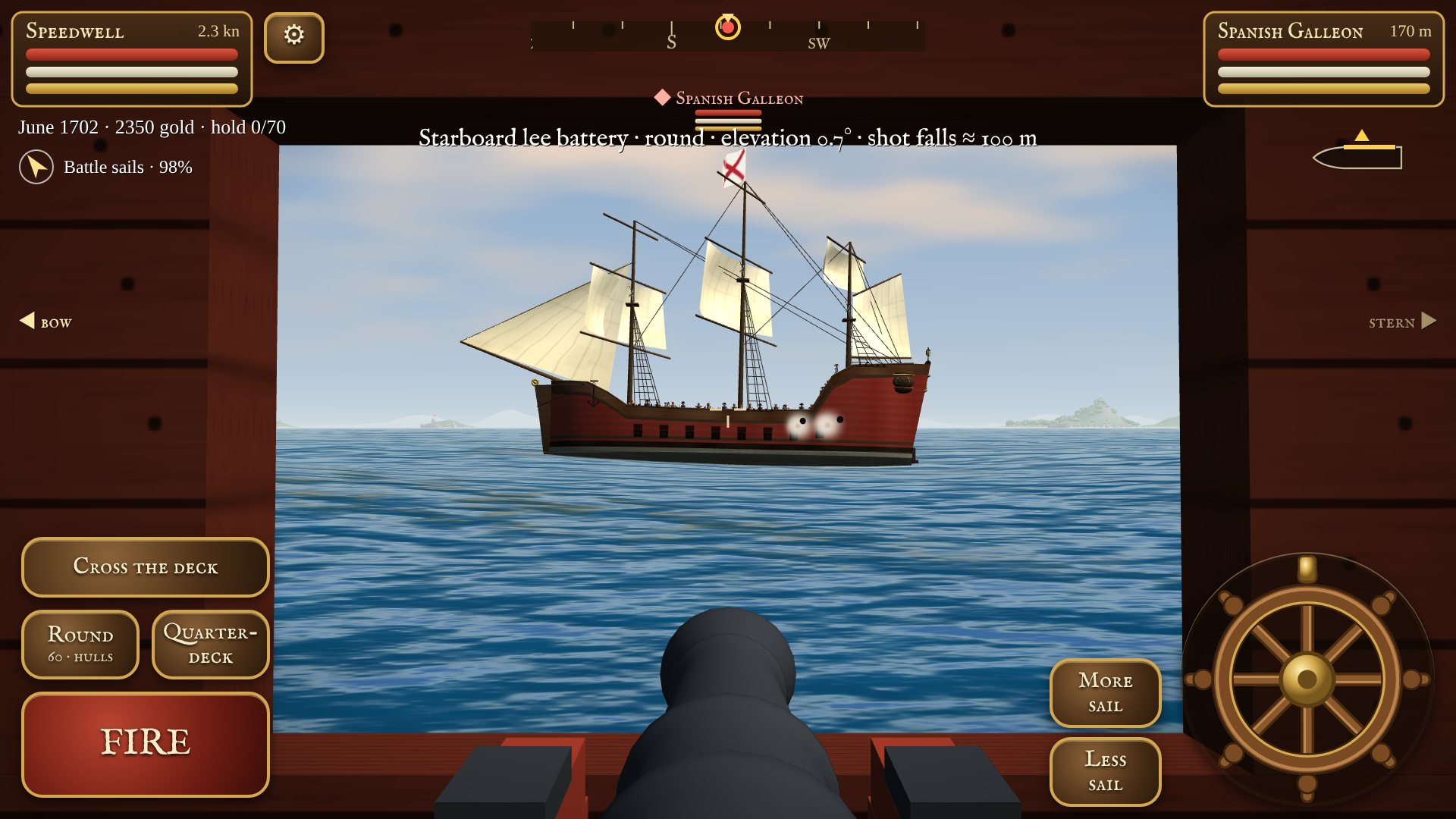
Each shot is a projectile with its own flight under gravity and drag. Elevation, range and the roll of the deck decide where it lands. There are four kinds of shot, and guns take as long to reload as their weight and their crews allow.
Damage
Hits are placed on the ship. Masts fall one by one, guns are dismounted, holes at the waterline let in the sea, fire spreads, and a rudder can be shot away. The pumps and the carpenter compete with the guns for men.
Crew
You carry a company of named officers and hands with ratings and histories. They are killed, wounded and promoted. Their morale changes how fast the guns are served and how a boarding goes, and it responds to pay, prizes, losses and how you treat people. Your officers bring you requests and complaints, and remember the answers.
Prize law
A ship that strikes is a prize, and what you may do with her depends on your commission. Prizes are condemned and sold through a court. Firing on a friendly ship turns her against you, and breaking a truce costs you the trust of your own crew.
Trade
Seventeen ports buy and sell six cargoes at prices set by what each island grows and lacks. Shortages and gluts come and go with the news, and your own sales move a market.
Weather and light
Day and night, fog, rain and the hurricane season all matter. In darkness and thick weather ships sight one another later, which changes who can run and who can be surprised.
The other side
Enemy captains weigh the odds, fight in different styles, and bear away when beaten. Merchantmen run for the nearest friendly fort. Forts have garrisons and guns of their own.
Where the game simplifies
A simulator that took six weeks to cross the Caribbean would not be played on a phone. These are the main liberties.
- Distance and time are compressed. The chart has the true shape of the Caribbean, but passages take minutes. A fast passage setting shortens them further when no enemy is in sight.
- Sail handling is reduced to three settings. You choose furled, battle sails or full sail. The crew trims the yards for you.
- Crews are shown at a fraction of their number. A ship of eighty hands shows a few dozen on deck.
- Navigation is given to you. You always know where you are. Longitude could not be found reliably at sea in 1702, and the game does not ask you to try.
- Ships and captains at sea are invented. Real people of the time appear only in the news you read ashore.
Within those limits the game tries not to cheat. Ships' guns fire no explosive shell, because they did not. Fireships need the wind behind them. Grenadoes fail in the rain.
Who it suits
If you want sea monsters and cursed treasure, this is the wrong game. If you have read Patrick O'Brian or C. S. Forester, or have ever wondered why the weather gauge mattered, you will probably be at home. It asks more of you than an arcade game and explains itself as it goes. A new captain is walked through a first prize, and three difficulty levels let you choose how much the simulation forgives.
The ship combat page goes into the fighting. The overview covers the rest, and the questions page has practical answers.
Take her to sea
The game opens in this browser tab. On a phone, turn it sideways and switch the sound on.